
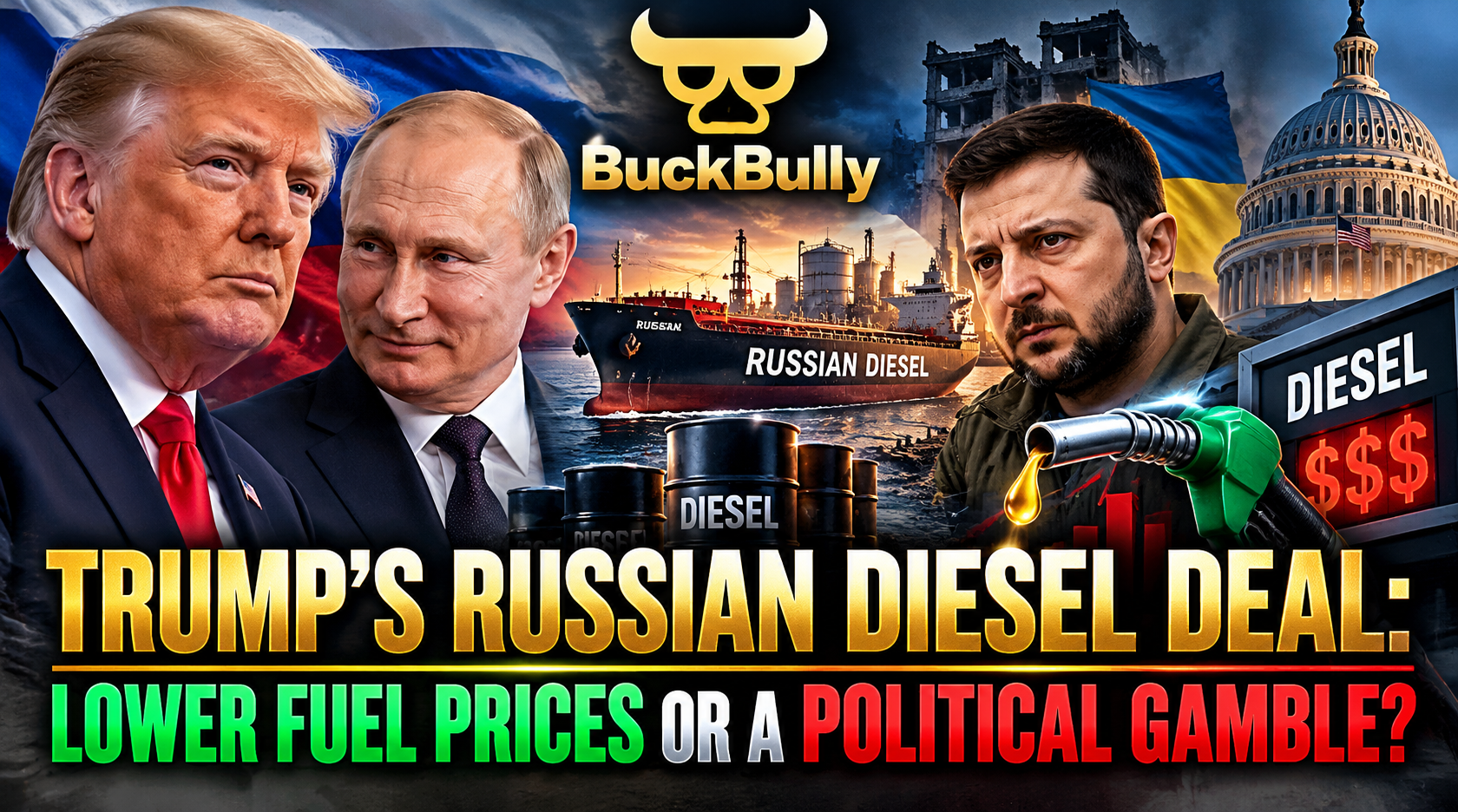
Lower Fuel Prices or a Political Gamble?
Can America lower fuel prices by doing business with Russia while simultaneously trying to stop Russia’s war in Ukraine? That’s the billion-dollar question following President Donald Trump’s surprise diesel agreement with Russian President Vladimir Putin.
With diesel prices soaring, truckers feeling the squeeze, and everyday Americans paying more for goods and services, Trump is looking for relief in an unexpected place: Moscow.
But the deal is already creating political fireworks in Washington and angering America’s Ukrainian allies.
The Deal: Russian Diesel Headed to Global Markets
On Friday, October 9, Trump announced an agreement with Putin to release millions of tons of Russian diesel into American and global markets.
Here’s the proposed breakdown:
- 300,000+ tons: Immediate supply
- 500,000 tons: Additional shipments in November
- 1 million tons: Expected shortly afterward
- 3 million more tons: Additional supply promised, depending on Russian refinery conditions
The U.S. Treasury also issued temporary sanctions relief allowing Russian diesel to reach global markets.
Trump’s objective? Increase fuel supplies, bring down diesel prices, and ease the financial burden on American businesses and consumers.
And with the November midterm elections approaching, energy prices have become an especially sensitive economic issue.
Ukraine Responds: A Gift to Putin?
Ukrainian President Volodymyr Zelensky wasn’t celebrating.
He condemned the sanctions relief, warning that allowing Russia to generate additional energy revenue could help finance its continuing war against Ukraine.
Zelensky described the decision as a sign of weakness and argued that sanctions should not be relaxed without meaningful steps toward ending the conflict.
From Ukraine’s perspective, the concern is simple: Every additional dollar Russia earns from energy exports could potentially support its military operations.
But from the Trump administration’s perspective, increasing global fuel supplies is an opportunity to help Americans struggling with higher costs.
Two competing priorities. One controversial agreement.
Washington Pushes Back — From Both Parties
Perhaps the biggest surprise isn’t Ukraine’s reaction. It’s the resistance coming from Trump’s own political party.
A bipartisan group of U.S. senators, including Republicans Susan Collins, Lisa Murkowski, Thom Tillis and John Curtis, joined Democratic lawmakers in calling for the administration to reverse course.
Their concerns go beyond foreign policy.
Congress banned Russian energy imports in 2022 following Russia’s invasion of Ukraine. Lawmakers argue that allowing new diesel purchases could conflict with those restrictions and undermine efforts to limit Moscow’s war funding.
Meanwhile, Republican Senator John Barrasso defended Trump’s focus on reducing energy costs, arguing that the president faces difficult decisions.
The controversy raises another question: How far can the administration go in easing energy sanctions without additional congressional approval?
Will Diesel Prices Actually Drop?
Here’s where economics enters the conversation.
Diesel doesn’t just power trucks. It helps move the American economy.
Farmers need it for equipment. Trucking companies need it to deliver products. Construction businesses depend on it to operate machinery.
And when transportation expenses climb, those costs can eventually reach consumers through higher prices for groceries, clothing, building materials and other everyday purchases.
However, energy analysts aren’t convinced the Russian agreement will produce significant savings.
Why?
First, the proposed shipments are relatively small compared with global diesel consumption.
Second, transporting fuel takes time, meaning relief wouldn’t necessarily appear overnight.
Third, Russian refineries have suffered substantial disruptions during the war, raising questions about Moscow’s ability to deliver everything promised.
Simply put, announcing more diesel supply doesn’t automatically mean cheaper fuel at your neighborhood gas station.
The Bigger Picture: Energy, War and the Economy
This agreement highlights a difficult reality of global economics.
The United States wants affordable energy, but it also wants to maintain economic pressure on Russia over its invasion of Ukraine.
Those objectives can conflict.
Relaxing sanctions could increase available fuel supplies and potentially ease inflationary pressure. But it could also create new revenue opportunities for Russia while weakening the economic restrictions designed to influence Moscow’s behavior.
The financial impact will depend on how much diesel actually reaches the market, where it is sold, and whether additional supply is large enough to affect prices.
For investors, transportation companies and consumers, the numbers matter just as much as the political headlines.
BuckBully Bottom Line: Watch the Pumps, Not Just the Promises
Trump is betting that additional Russian diesel can help relieve America’s energy crunch. Critics are warning that the economic benefits may be limited while the diplomatic consequences could be significant.
For now, the agreement remains controversial, and meaningful fuel-price reductions are far from guaranteed.
At BuckBully, we’re watching three things: actual diesel deliveries, changes in fuel prices, and whether Congress challenges the administration’s sanctions decision.
Because in the end, Americans aren’t paying their bills with political announcements.
They’re paying with dollars.
And the real question remains: Will this agreement put more money back into American pockets, or simply open another chapter in the battle over Russia, Ukraine and global energy?
BuckBully.com — Where Collectibles Meet Markets.
Be Bullish On What You Hold.