
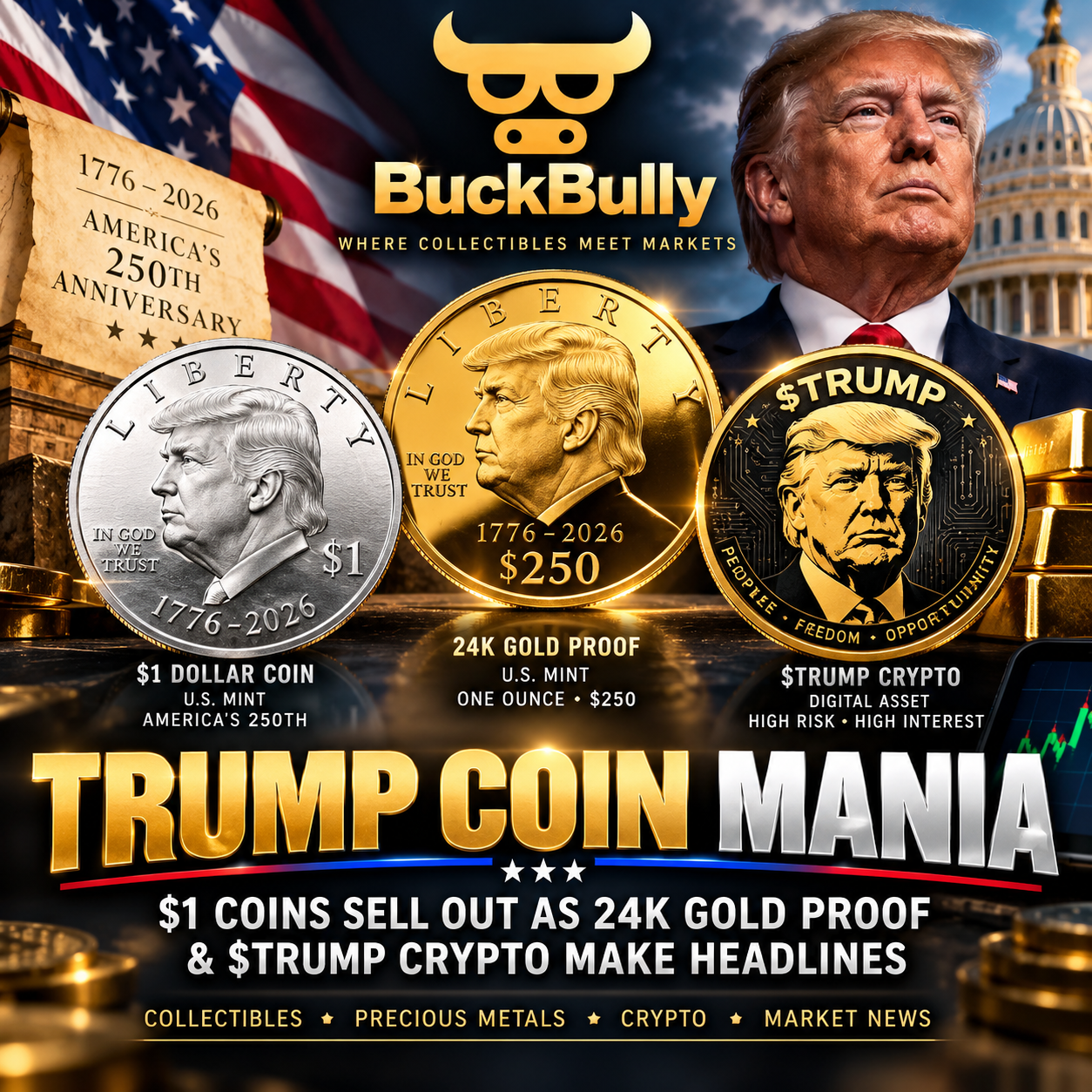
$1 Dollar Sells Out, 24K Gold Proof Coming and $TRUMP Crypto Makes Headlines
From traditional coin collecting to precious metals and cryptocurrency, President Donald Trump’s name is appearing across three very different corners of the collectibles and financial markets in 2026.
The biggest attention right now is surrounding the new 2026 President Donald J. Trump $1 Coin, released by the U.S. Mint as part of America’s 250th anniversary celebration.
But that isn’t the only Trump-related coin making headlines.
A one-ounce 24-karat gold $250 proof coin is scheduled to arrive later this year, while the separate OFFICIAL TRUMP ($TRUMP) cryptocurrency continues trading after experiencing enormous volatility since its launch.
For collectors and market watchers, it creates an unusual crossover between numismatics, precious metals and crypto.
The Trump $1 Coin Arrives — And Collector Demand Surges
The U.S. Mint officially released rolls and bags of the 2026 Semiquincentennial President Donald J. Trump $1 Coin on September 2.
The coin was created for the United States’ 250th anniversary and carries the dual dates 1776–2026.
The obverse features a portrait of President Trump along with “LIBERTY” and “IN GOD WE TRUST.” The reverse features the Presidential Seal, “UNITED STATES OF AMERICA,” “ONE DOLLAR” and a prominent “250” marking the anniversary.
The Mint originally offered:
25-coin roll — $61
100-coin bag — $154.50
These are genuine U.S. legal-tender $1 coins, although collectors were paying considerably more than their face value to obtain Mint-packaged examples.
And there’s another wrinkle that could keep collectors searching through rolls.
The July 4th Privy Mark Chase
The U.S. Mint produced 250,000 special Trump dollars on July 4, 2026, carrying a special “July 4th” privy mark.
Instead of selling those coins separately, the Mint randomly mixed them into Trump $1 coin rolls and bags.
That effectively created a modern-day coin hunt: collectors opening rolls could potentially discover the scarcer July 4th version among the regular coins.
With only 250,000 of the privy-mark coins produced, those pieces are likely to receive particularly close attention from collectors in the secondary market.
Missed the Mint? Littleton Coin Still Has Them
Collectors who missed the original U.S. Mint offering may still have another option.
As of September 22, 2026, Littleton Coin Company’s website lists an individual 2026 President Donald J. Trump Dollar for $2.95 and a Trump Dollar Roll for $59.95. Availability can change quickly.
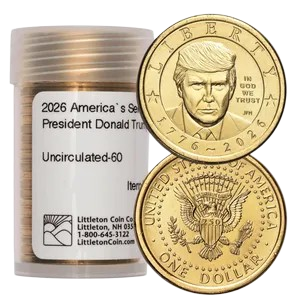
For collectors who simply want an example rather than an unopened Mint bag, that makes the individual coin especially accessible.
With interest surrounding the 250th anniversary issues, however, inventory at secondary coin dealers will be worth watching.
Next Up: A One-Ounce 24K Trump Gold Proof
The $1 coin may only be the beginning.
The U.S. Mint has officially announced a much more substantial precious-metal version: the 2026 President Donald J. Trump One Ounce 24K Gold Proof Coin.
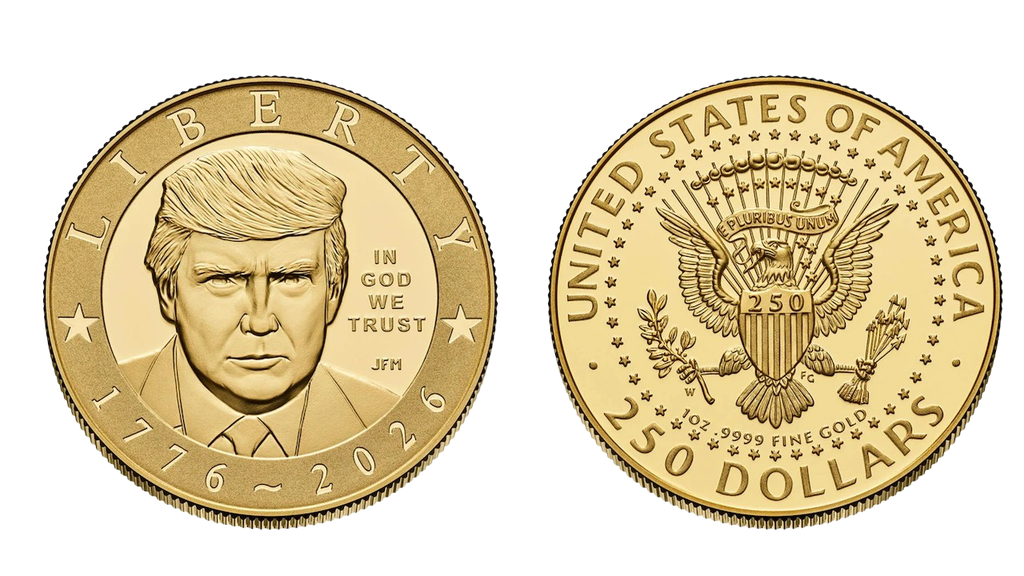
It is scheduled to go on sale November 5, 2026, exclusively through the U.S. Mint.
This isn’t a gold-plated collectible.
According to the Mint, each coin contains one full troy ounce of .9999 fine, 24-karat gold and will be produced at the West Point Mint.
The coin carries a $250 denomination.
Its design follows the same general theme as the $1 anniversary coin, with Trump’s portrait and the dates 1776–2026 on the obverse and the Presidential Seal on the reverse.
The Mint currently lists the price as TBD, meaning the eventual retail price has not yet been announced.
Because the coin contains an ounce of fine gold, its intrinsic metal value will move with the gold market, while its eventual collector value will also depend on factors such as the Mint’s final price, mintage, demand and secondary-market activity.
Then There’s the Other Trump Coin: $TRUMP Crypto
The physical U.S. Mint coins should not be confused with OFFICIAL TRUMP ($TRUMP), the cryptocurrency.
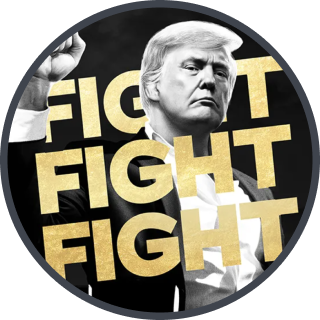
Unlike the $1 and $250 coins, $TRUMP is not U.S. legal tender and is not produced by the U.S. Mint. It is a highly speculative digital token whose market price can move dramatically.
As of September 22, market data showed $TRUMP trading around $2.18–$2.19, after enormous swings from its earlier highs.
The broader political debate surrounding cryptocurrency also remains active in Washington.
The Senate recently failed to advance the Digital Asset Market Clarity Act in a procedural vote. Republican Sen. Cynthia Lummis has blamed Democratic opposition and disputes involving Trump-related crypto interests, while reporting on the negotiations shows that lawmakers also disagreed over ethics safeguards, regulatory staffing, anti-money-laundering provisions and other issues.
That distinction matters: political claims about why the legislation failed remain disputed, while the failed Senate vote itself is a matter of record.
Three Trump Coins — Three Completely Different Markets
Despite sharing the Trump name, these assets shouldn’t be viewed as interchangeable.
The $1 Trump coin is U.S. legal tender and primarily a numismatic collectible.
The upcoming $250 Trump Gold Proof is U.S. legal tender containing one ounce of .9999 fine gold, giving it both precious-metal and collector characteristics.
And $TRUMP crypto is a speculative digital asset whose price is determined by cryptocurrency-market trading rather than its face value or precious-metal content.
That makes 2026 an unusual year in which the same name is simultaneously attracting attention from coin collectors, gold buyers and cryptocurrency traders.
For traditional collectors, the immediate story may be the $1 coin — particularly the hunt for those 250,000 July 4th privy-mark examples.
Next comes November 5 and the launch of the one-ounce 24K gold proof.
And in crypto?
$TRUMP continues to demonstrate why digital tokens belong in an entirely different risk category.
BuckBully Market Watch: Whether you collect physical currency, precious metals, trading cards or digital assets, scarcity alone doesn’t guarantee future value. Mintage, condition, certification, demand and market sentiment ultimately determine what collectors are willing to pay.