
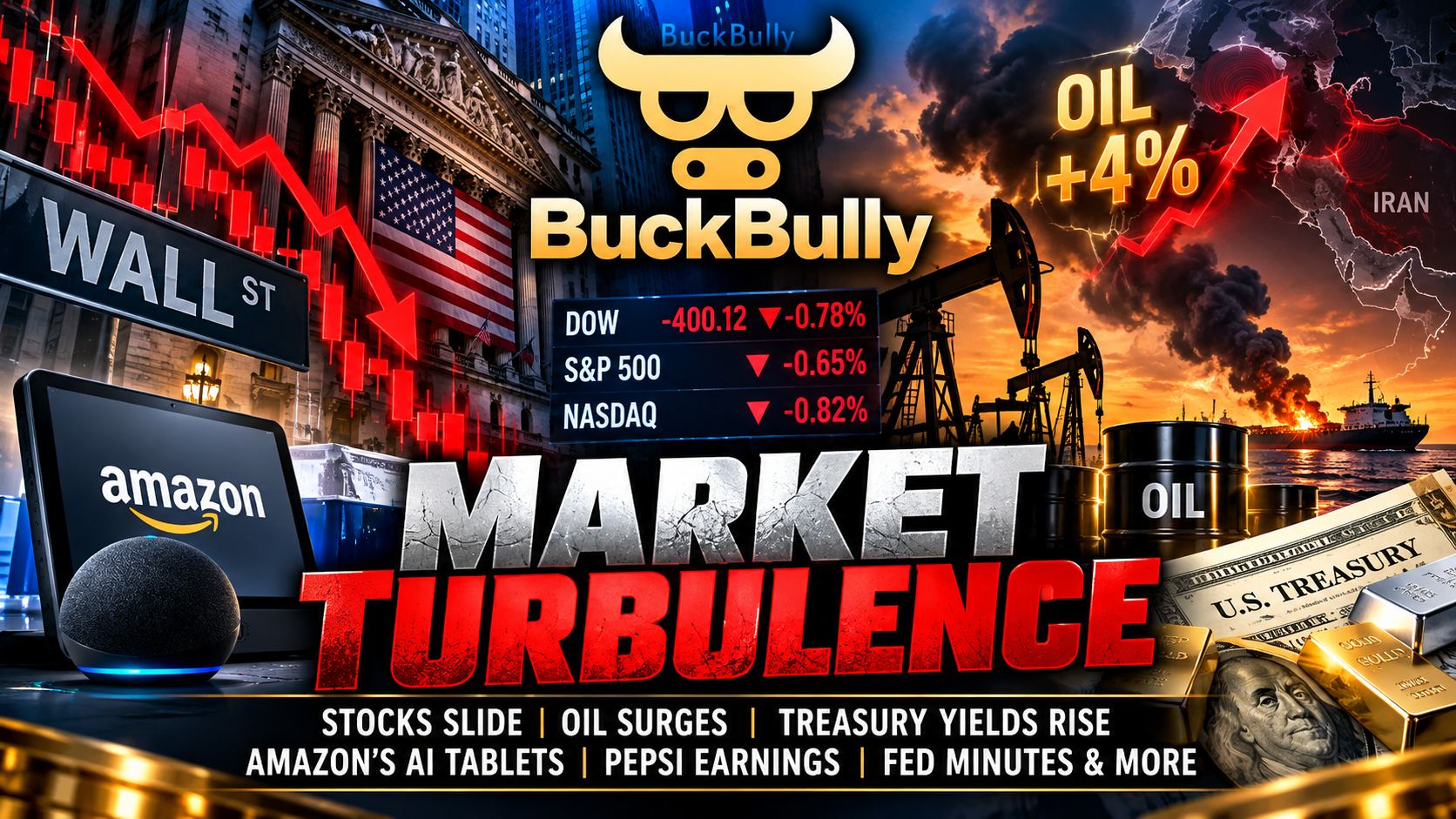
Stocks Slide, Oil Surges, and Treasury Yields Rattle Wall Street
Wall Street is facing another turbulent trading session as rising Treasury yields, escalating tensions in the Middle East, and a sharp increase in oil prices put investors on the defensive. Meanwhile, Amazon is making a major strategic shift in consumer technology, and fresh economic developments could determine where markets head next.
Wall Street Opens Under Pressure
The stock market is struggling to find its footing Thursday morning as investors confront a combination of geopolitical uncertainty, rising borrowing costs, and renewed inflation concerns.
The Dow Jones Industrial Average came under significant selling pressure, with early reports indicating a decline of approximately 400 points. The S&P 500 and Nasdaq Composite also opened lower as investors reassessed the outlook for interest rates and economic growth.
The selloff reflects a broader concern: the financial environment may remain restrictive longer than investors previously anticipated.
Rising Treasury yields are particularly troublesome for growth-oriented stocks, including technology companies whose valuations depend heavily on expectations of future earnings.
For investors, the challenge is determining whether the latest pullback represents a temporary reaction to geopolitical headlines or the beginning of a more sustained market correction.
Oil Prices Jump 4% as Middle East Tensions Escalate
Energy markets are once again becoming a major driver of global financial sentiment.
Oil prices climbed approximately 4% amid reports of another tanker attack and growing concerns that military conflict involving Iran could resume.
The possibility of disruptions to Middle Eastern oil shipments has renewed fears about global energy supplies.
Higher crude prices create several economic challenges:
- Inflation: Rising fuel and transportation costs can eventually push consumer prices higher.
- Corporate earnings: Airlines, shipping companies, manufacturers, and retailers may face increased operating expenses.
- Consumer spending: Higher gasoline prices can reduce household purchasing power.
- Monetary policy: Persistent energy inflation could complicate the Federal Reserve’s ability to lower interest rates.
Energy producers may benefit from stronger crude prices, but the broader economy could face additional pressure if oil remains elevated.
BuckBully’s Perspective
Oil isn’t simply reacting to supply and demand fundamentals. Right now, geopolitical risk is playing an increasingly important role in price movements.
If tensions ease, crude could surrender some of its recent gains. However, additional attacks or disruptions to major shipping routes could trigger another wave of buying.
Investors should pay particular attention to energy stocks, transportation companies, and inflation-sensitive industries.
Treasury Yields Climb: Why Wall Street Is Concerned
The bond market is sending an important message.
As Treasury yields continue rising, borrowing becomes more expensive across the economy. This affects everything from corporate financing to mortgages, credit cards, and automobile loans.
Higher yields also make government bonds more attractive relative to riskier investments.
For stocks, the consequences can be significant.
Technology and other growth stocks often experience valuation pressure when yields rise. Companies carrying substantial debt may face increased refinancing expenses, while smaller businesses can struggle to access affordable capital.
Financial institutions present a more complicated picture. Higher interest rates can improve certain lending margins, but they can also reduce loan demand and increase credit risk.
The relationship between bonds and stocks will likely remain a central theme for investors throughout October.
Federal Reserve Minutes Could Influence the Next Market Move
Investors are also watching developments surrounding the Federal Reserve, including the release of meeting minutes and additional economic commentary.
The central question remains whether policymakers believe inflation is sufficiently under control to justify a more accommodative interest-rate environment.
Renewed increases in energy prices could complicate that decision.
If policymakers emphasize persistent inflation risks, Treasury yields could remain elevated and equities could face additional pressure.
On the other hand, signs of weakening economic activity or easing underlying inflation could strengthen expectations for future rate cuts.
The market is effectively balancing two competing risks: inflation staying too high and economic growth slowing too much.
Amazon Reinvents Its Tablet Business With a Premium AI Strategy
While Wall Street focuses on inflation and geopolitical risks, Amazon is making headlines with a significant transformation of its consumer electronics business.
The company introduced a new generation of Alexa-powered tablets, moving beyond its traditional emphasis on affordable Fire devices.
The new lineup includes:
| Device | Starting price |
|---|---|
| Alexa Tablet 8 | $229.99 |
| Alexa Tablet 11 | $329.99 |
| Alexa Tablet 12 Pro | $499.99 |
Unlike traditional Fire tablets, the new devices run Android, offer access to the Google Play Store, and integrate Amazon’s Alexa+ artificial intelligence assistant.
The strategic shift places Amazon in more direct competition with Apple and Samsung.
Why This Matters for Investors
Amazon is attempting to transform its devices business from a budget-hardware operation into a more premium, AI-centered ecosystem.
Rather than relying primarily on inexpensive devices to attract customers, the company is betting that better hardware, improved software, and AI functionality can encourage consumers to spend more.
The potential benefits include stronger hardware revenue, deeper customer engagement, and greater adoption of Amazon’s subscription services.
However, higher prices also introduce risk. Consumers accustomed to inexpensive Fire tablets may be reluctant to upgrade.
BuckBully’s Take: Amazon’s strategy illustrates how artificial intelligence is moving beyond cloud computing and into everyday consumer products. The opportunity is significant, but the company still needs to prove that customers will pay more for AI-powered hardware.
PepsiCo Earnings Highlight Consumer Spending Challenges
PepsiCo is another company drawing attention as investors evaluate the health of American consumers.
The food and beverage giant reported third-quarter revenue of approximately $25.27 billion and adjusted earnings of $2.34 per share, exceeding expectations.
However, the company also reduced its full-year profit outlook, citing pressures affecting its North American business.
The results highlight an important distinction between revenue growth and profitability.
Companies may continue generating strong sales while experiencing margin pressure from higher production costs, weaker demand, or changing consumer preferences.
For PepsiCo, maintaining sales momentum while controlling expenses will be critical.
What This Means for the Broader Market
Consumer staples are traditionally viewed as defensive investments because households continue purchasing groceries, beverages, and everyday necessities even during economic slowdowns.
But defensive does not necessarily mean immune to inflation.
If companies cannot pass rising costs along to customers without hurting demand, profitability can deteriorate.
PepsiCo’s results offer another reminder that investors should examine operating margins, sales volumes, and forward guidance rather than focusing exclusively on headline earnings.
Technology Stocks Face a New Test
Technology companies have been among the biggest beneficiaries of enthusiasm surrounding artificial intelligence.
However, the combination of rising Treasury yields and concerns about AI infrastructure spending is introducing additional uncertainty.
Investors are increasingly questioning how quickly enormous investments in data centers, semiconductors, and computing infrastructure will translate into sustainable profits.
Companies such as Nvidia, Broadcom, Oracle, and Amazon remain important names to watch.
The underlying demand for AI infrastructure may remain strong, but the cost of financing expansion could become a larger concern if interest rates continue climbing.
BuckBully’s Perspective: The next phase of the AI investment cycle may be less about which companies announce the biggest spending commitments and more about which companies demonstrate the strongest returns on those investments.
Small-Cap Stocks and Housing Could Face Additional Pressure
Higher Treasury yields create challenges beyond the major stock indexes.
Smaller companies often depend more heavily on borrowed capital and may have less flexibility when refinancing debt.
This makes small-cap stocks particularly sensitive to changes in interest rates.
The housing market faces similar obstacles.
As Treasury yields rise, mortgage financing can become more expensive, potentially weakening affordability and discouraging prospective buyers.
Homebuilders, real estate investment trusts, and construction-related businesses could experience additional volatility if borrowing costs remain elevated.
Investors looking for opportunities in these sectors should distinguish between financially stable companies and businesses carrying significant debt burdens.
BuckBully Market Watch: Where Opportunities and Risks Are Developing
| Market sector | Current outlook | What to watch |
|---|---|---|
| Energy | Potential beneficiary | Oil supply disruptions and geopolitical developments |
| Technology & AI | Volatile | Treasury yields, earnings and infrastructure spending |
| Consumer staples | Mixed | Profit margins and consumer demand |
| Small-cap stocks | Under pressure | Borrowing costs and refinancing risks |
| Housing & REITs | Cautious | Mortgage rates and affordability |
| Treasury bonds | Volatile | Inflation expectations and Federal Reserve policy |
| Gold & precious metals | Potential defensive interest | Dollar strength, yields and safe-haven demand |
| Cryptocurrency | Risk-sensitive | Liquidity, Bitcoin support levels and investor sentiment |
What Investors Should Watch Next
The remainder of the trading week could provide important clues about the market’s direction.
Three developments deserve particular attention.
First, oil prices. Another major increase could intensify inflation fears and put additional pressure on equities.
Second, Treasury yields. Continued increases could weigh on technology, real estate, and smaller companies. Stabilizing yields might help restore investor confidence.
Third, corporate earnings. Investors will be looking for evidence that businesses can maintain profitability despite rising costs, expensive financing, and an uncertain economic environment.
The upcoming earnings reports from major banks and other economically sensitive companies could offer valuable insight into consumer credit, business lending, and the overall health of the economy.
Final Word: The Market Is Entering a Critical Crossroads
Wall Street is facing a difficult combination of rising energy prices, elevated borrowing costs, geopolitical uncertainty, and questions surrounding corporate profitability.
These developments do not automatically signal an approaching recession or prolonged bear market. However, they do create an environment where investors may need to become more selective.
Energy companies could benefit from higher crude prices, while businesses with strong balance sheets and dependable cash flow may prove more resilient than highly leveraged competitors.
Artificial intelligence remains a powerful long-term investment theme, but rising financing costs could force investors to reconsider valuations and expectations.
For long-term investors, volatility can create opportunities. The challenge is separating fundamentally attractive investments from assets that are simply becoming cheaper.
The BuckBully Bottom Line: The market isn’t just reacting to today’s headlines. It’s attempting to price tomorrow’s inflation, interest rates, geopolitical risks, and corporate earnings all at once.
And when so many forces collide, patience, diversification, and disciplined decision-making can become just as valuable as finding the next winning stock.
Stay informed. Watch the trends. Understand the risks. And remember: Be Bullish On What You Hold. Based on morning market developments; prices and market conditions can change throughout the trading session. This article is for informational purposes and does not constitute financial advice.