
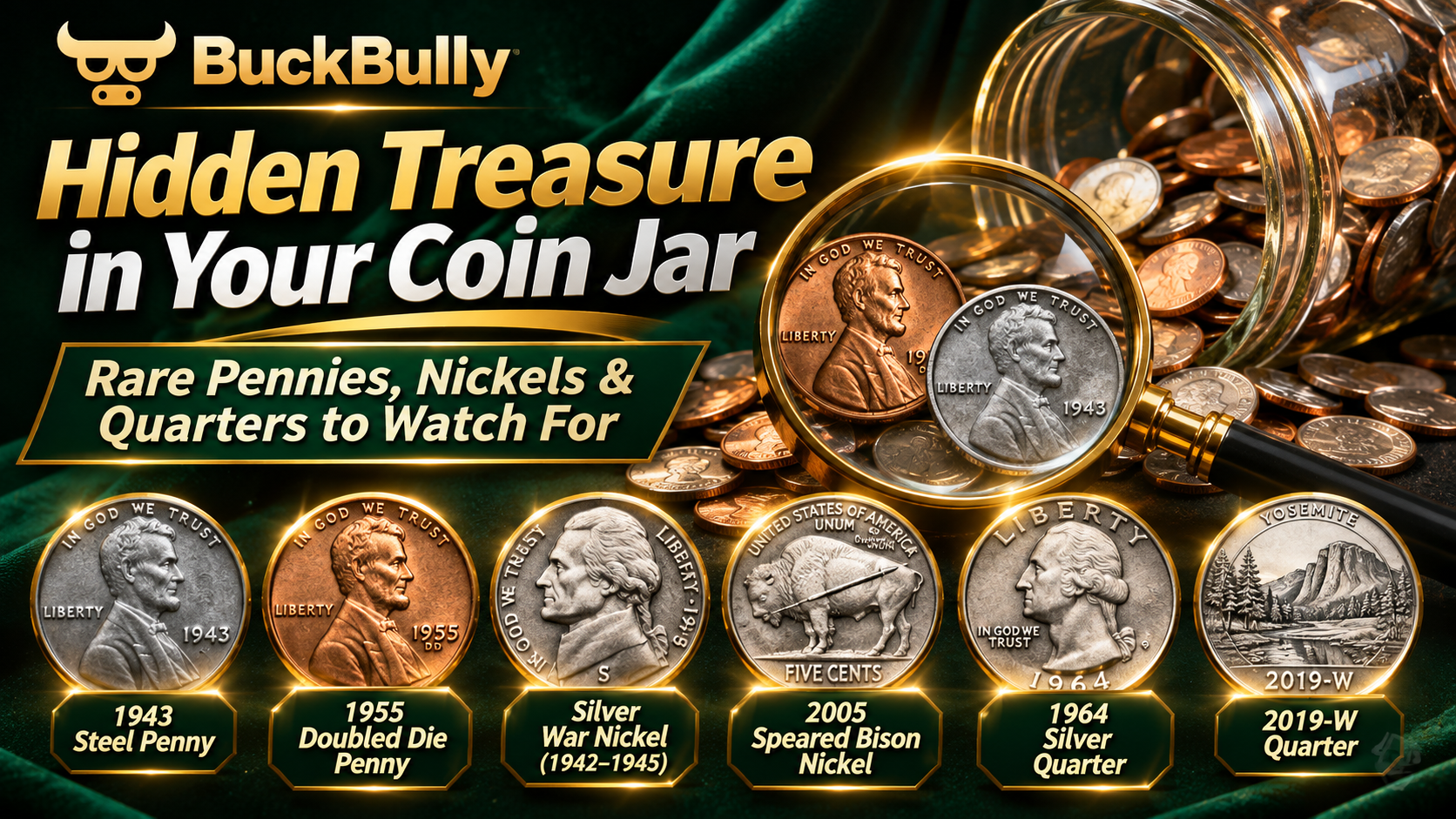
RARE PENNIES • NICKELS • QUARTERS
Before you dump that change into a coin machine, take a closer look. Your next valuable collectible might be hiding between ordinary pennies, nickels and quarters.
💰 Your Change Could Be Worth More Than Face Value
Most coins in circulation are worth exactly what they say. However, specific dates, rare mint varieties, production errors and precious-metal content can transform a seemingly ordinary coin into a collectible.
The trick is knowing the difference between a genuinely scarce coin and common pocket change. A normal 1976 Bicentennial quarter, for example, is usually worth 25 cents in circulated condition, while a 2004-D Wisconsin Extra Leaf error can carry a meaningful premium.
🪙 Interactive Coin-Jar Treasure Hunt
Browse the coins worth checking, see illustrated design clues, and learn what makes each example special. Tap a coin illustration or the Inspect button for detailed identification tips.
Your finds are stored privately in this browser. Marking a coin found does not verify its authenticity.
🔍 How to Search Your Change Like a Collector
Sort by denomination
Separate pennies, nickels and quarters. Look for older designs before checking unusual dates and errors.
Check the year
Start with Wheat pennies, 1942–45 silver war nickels, and quarters dated 1964 or earlier.
Read the mintmark
Look for D, S, P or W, depending on the coin and year. The mintmark’s position can change by design.
Examine the lettering
Use a 5×–10× loupe. Look for recognized doubled dies, unusual letter spacing and specific die varieties.
Check weight and edge
A small gram scale helps distinguish copper cents and potential wrong-metal coins. The edges of silver quarters are also revealing.
Verify before selling
Compare the exact variety, condition and completed sales. Consider professional authentication for significant finds.
⚖️ Interactive Silver Coin Calculator
A typical 90% silver Washington quarter contains approximately 0.18084 troy ounces of pure silver. A wartime silver nickel contains approximately 0.05626 troy ounces. Enter a silver spot price manually to estimate melt value.
The default $50 silver spot price is only an example, not a live quote. Actual transactions depend on market price, dealer spread, and coin authentication. Rare dates may be worth much more than melt.
🎯 Is It a Real Mint Error?
Signs Worth Investigating
Strong, recognized doubled-die details; a confirmed extra leaf; a specific mintmark or design variety; an off-center strike with genuine mint characteristics; or an unexpected weight that survives verification.
Common False Alarms
Scratches mistaken for doubling, worn-off letters, machine doubling, plating bubbles, chemical discoloration, or coins damaged by tools and rolling machines. These generally do not create valuable mint errors.
🏆 BuckBully’s Top Three Coin-Jar Priorities
1. Old Silver Quarters
Check dates of 1964 and earlier. These offer a relatively straightforward silver-content opportunity and can be worth more for scarce dates or better grades.
2. Modern Mint Varieties
Watch for 2004-D Wisconsin Extra Leaf quarters, 2005-D Speared Bison nickels and 2019-W quarters. The correct design details matter.
3. Wheat Cents & Key Dates
Pull aside wheat-back pennies, then identify scarce dates, strong doubled dies and possible off-metal errors with a magnifier and gram scale.
Bonus: Coin Roll Hunting
Ask a bank about obtaining rolls of change. Sorting rolls can be entertaining, but valuable finds are uncommon and the process takes patience.
What to inspect
Value is conditional on the correct variety, condition and authenticity.