
$14 Million Jordan Jersey, Live Auctions, Labubu & the Next Big Resale Trends
From million-dollar sports memorabilia to live-stream auctions and designer toys, the collectibles industry is entering a new era. But with prices moving quickly, knowing what to buy—and what to avoid—has never been more important.
The collectibles market isn’t just about dusty baseball cards, old comic books, or action figures sitting on shelves anymore. It’s becoming a global marketplace where nostalgia meets technology, fandom drives demand, and everyday collectors compete with investors willing to spend millions.
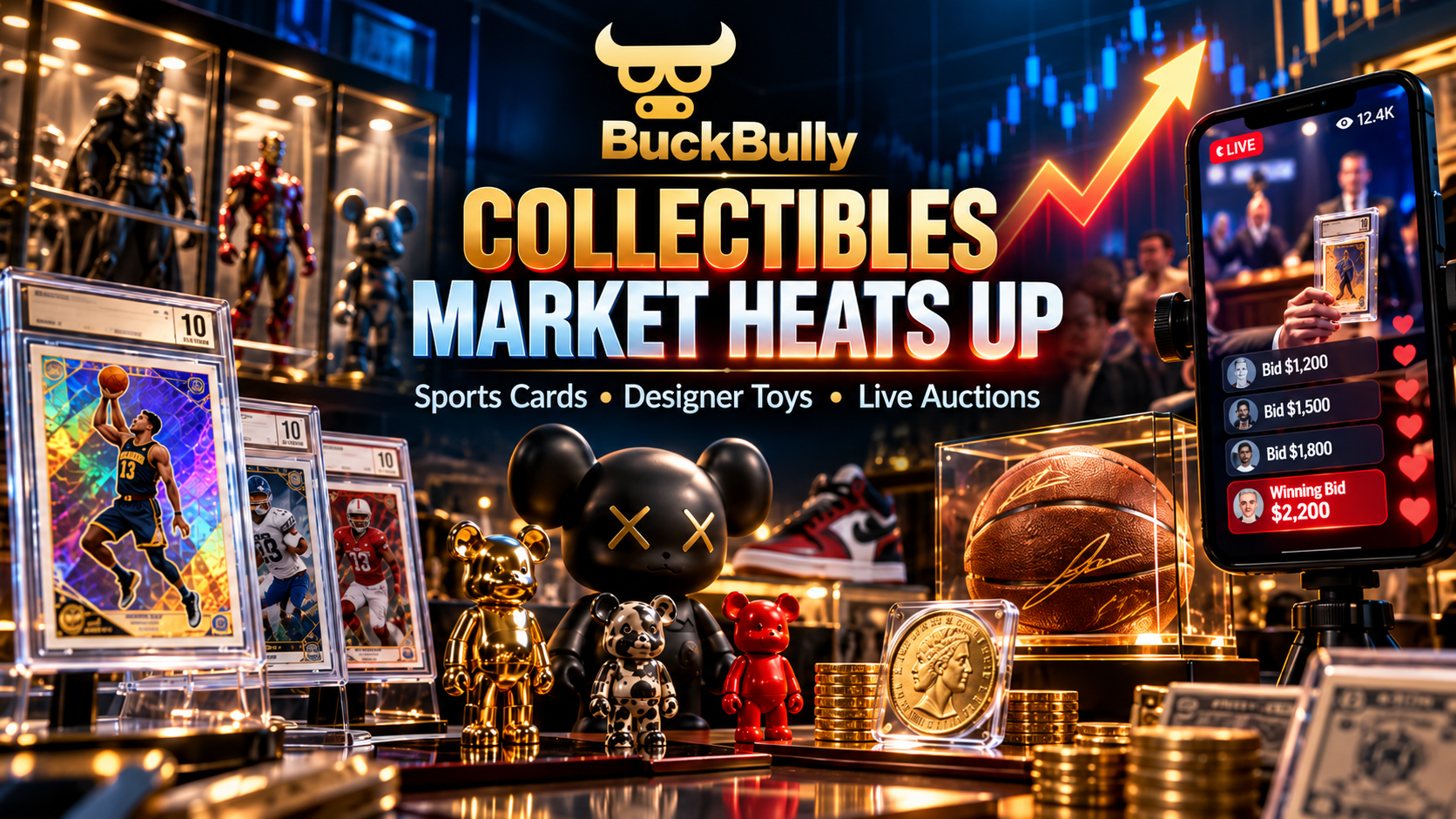
Sports cards are grabbing headlines with massive sales. Live shopping platforms are transforming conventions into digital auction houses. Designer collectibles are attracting younger buyers, while classic names like Michael Jordan, Kobe Bryant, and Batman continue to prove that nostalgia can carry serious financial value.
But here’s the question BuckBully is asking: Are we watching a sustainable collectibles boom, or another market where hype is moving faster than actual value?
Let’s break down what’s happening, where the opportunities are, and what collectors should watch before spending their money.
1. Sports Memorabilia: Michael Jordan Sets the Market on Fire

$14 million
Michael Jordan’s 1998 NBA Finals Game 2 jersey
A game-worn, autographed Bulls road jersey sold privately for $14 million, establishing a new reported record for basketball memorabilia.
On October 12, 2026, Hunt Auctions announced the historic sale of Jordan’s red Chicago Bulls jersey from Game 2 of the 1998 NBA Finals against the Utah Jazz.
Jordan scored 37 points in that game, helping Chicago tie the series before eventually winning its sixth NBA championship.
The buyer, Miami investor Ron Firman, acquired more than a piece of fabric. He purchased a documented part of basketball history.
Then there’s the reported $6.5 million sale of a one-of-one Kobe Bryant and LeBron James dual Logoman autograph card, another example of collectors paying enormous premiums for rare pieces featuring basketball’s biggest names.
These transactions send a powerful message: the upper end of the collectibles market still has buyers willing to pay exceptional prices for iconic, historically important items.
BuckBully Take: Don’t confuse record-breaking auction headlines with the value of everyday collectibles. A rare, authenticated, game-worn Jordan jersey belongs in a completely different market from a mass-produced Jordan trading card.
For regular collectors, the opportunity often lies in identifying undervalued items before broader demand catches up—not chasing a record price after the headlines.
2. Live Shopping Is Changing How Collectibles Are Bought and Sold


New York Comic Con 2026, held October 8–11, offered a glimpse into the future of collectibles retail.
Rather than relying only on customers walking up to convention booths, sellers used cameras, lighting, live hosts, and interactive broadcasts to connect with online buyers.
Whatnot brought a 5,000-square-foot Liveplex experience to the show, allowing participating sellers to reach customers beyond the convention floor.
And this trend goes far beyond comics.
Sports cards, Pokémon, Funko Pops, coins, currency, action figures, and other collectibles all lend themselves to live demonstrations and auction-style selling.
What makes the format attractive is its ability to create immediate excitement. Buyers can see the product, interact with the host, bid against other collectors, and potentially secure an item within seconds.
However, that excitement also creates risk.
A $20 collectible can quickly turn into a $45 purchase when several bidders get competitive. Add shipping, taxes, and resale fees, and the supposed bargain may disappear.
BuckBully Take: Live auctions can be excellent places to discover inventory, but never confuse winning an auction with getting a good deal.
A winning bid only makes sense when the numbers work.
3. Pop Mart, Labubu & Designer Toys: Trend or Long-Term Investment?

Add to Favorites


Pop Mart helped introduce a new generation of consumers to collectible designer toys, with Labubu becoming one of the biggest pop-culture phenomena in the category.
The combination of blind boxes, limited releases, celebrity attention, and distinctive character designs created intense demand.
At their peak, certain Labubu releases commanded resale prices far above original retail.
But the secondary market has also demonstrated how quickly those premiums can disappear.
A May 2026 analysis of several Labubu editions documented peak resale premiums between 195% and 579% before those same editions traded below retail. June reporting also described a cooling resale market as supply increased.
That doesn’t mean Labubu collecting is finished. It means the market is becoming more selective.
Collectors should pay attention to whether an item is genuinely scarce, whether demand persists after release week, and how many additional units the manufacturer can produce.
BuckBully Take: Limited availability and permanent scarcity are not the same thing. A sold-out product can still lose value if production expands or collectors shift to the next trend.
For resale, purchase price matters more than excitement.
4. Hot Toys, Funko Pops & Comic Collectibles Keep Nostalgia Alive


Pop culture continues to be one of the most interesting corners of the collectibles industry because demand stretches across generations.
Collectors who grew up watching Batman, Marvel, Star Wars, and classic television shows are now adults with purchasing power.
Premium manufacturers such as Hot Toys target enthusiasts who want highly detailed, display-quality figures, while brands such as Funko offer a more accessible entry point.
And comic books remain relevant, particularly when publishers introduce new characters, limited covers, artist collaborations, and convention exclusives. At NYCC 2026, Whatnot’s program included exclusive comic releases and live artist signings.
For resellers, these categories have different advantages.
Premium action figures can carry higher selling prices, but they require more capital, packaging, and storage space. Funko Pops are easier to collect and ship, but heavy production and re-releases can limit appreciation.
Comics offer opportunities through key first appearances, sought-after covers, signatures, and strong condition grades, yet not every variant is truly rare.
BuckBully Take: Nostalgia creates demand, but condition, authenticity, production numbers, and actual sold prices determine what someone will pay.
A recognizable character alone doesn’t make something valuable.
5. Soccer Cards Are Becoming a Global Collectibles Powerhouse

The 2026 FIFA World Cup has helped introduce more collectors to the global soccer card market.
And one of the biggest names attracting attention is Lamine Yamal.
The young Spanish star has become an important name for collectors looking beyond traditional American sports.
A Topps Chrome debut card featuring Yamal reportedly sold for $168,000 in May 2026. An autographed national debut Superfractor previously approached $400,000 in June 2025.
Those aren’t ordinary trading cards. They are premium examples where scarcity, condition, and player popularity intersect.
The potential appeal of soccer collectibles goes beyond a single player. Unlike American football or baseball, soccer has a massive international fan base, creating demand across Europe, Asia, Latin America, and North America.
BuckBully Take: Soccer deserves attention from American card collectors, especially when researching young stars and scarce rookie-era releases. But don’t assume every Yamal card is worth thousands. The exact set, parallel, grade, and population can change its value dramatically.
6. New Sports Card Releases Keep the Hobby Moving
Manufacturers aren’t slowing down.
Products such as 2026 Bowman Chrome, Bowman Chrome Sapphire, Topps Chrome, and additional October releases continue giving collectors fresh cards to chase.
The October 7 Bowman Chrome Sapphire release, for example, featured exclusive colored parallels and at least one autograph per box.
For buyers, new releases can create opportunities—but they also create supply.
A premium sealed box may be desirable at launch, yet its resale performance depends on the checklist, production, pull odds, and demand after the initial excitement fades.
The same goes for rookie cards. A hot start to a professional career can drive prices higher, but injuries, inconsistent performance, and increasing graded populations can quickly reverse those gains.
BuckBully Take: Before buying sealed boxes for resale, compare recent completed sales with your total acquisition cost. Sometimes the better investment is buying the specific card you want instead of gambling on what might be inside a box.
7. BuckBully Collectibles Market Watch
Here’s how we’re looking at the major collectible categories as of October 18, 2026.
| Category | Market attention | BuckBully outlook |
|---|---|---|
| Sports cards | High | Selective buying, especially rare cards and strong rookies |
| Game-worn memorabilia | High-end record activity | Strongest historical pieces remain attractive |
| Labubu / Pop Mart | High but volatile | Beware of inflated resale premiums |
| Funko Pops | Selective | Focus on vaulted, exclusive and scarce editions |
| Hot Toys / Action Figures | Active niche | Favor iconic characters and limited production |
| Comics | Convention-driven | Key issues and authenticated signatures |
| Soccer cards | Global interest | Watch rookie-era and scarce graded cards |
| Coins & Currency | Established collector market | Prioritize authenticity, grade and rarity |
| Pokémon / TCG | Active collector demand | Research individual cards and sealed supply |
Qualitative BuckBully market assessment, not a measured category-wide price index or guaranteed resale forecast.
8. What’s Actually Worth Buying for Resale?
The best collectible isn’t necessarily the most popular. It’s the one you can purchase below its realistic resale value.
Let’s say you discover an item selling consistently for $100.
BuckBully Resale Calculator
Know your numbers before you buy.
Illustrative estimates only. Excludes taxes, packaging, returns and other expenses. BUY requires an estimated profit margin of at least 20%; MAYBE indicates a smaller nonnegative margin.
Interactive illustrative calculator. Adjust the costs to see how quickly resale profit changes. Excludes taxes, supplies, returns and other overhead.
This is why researching completed sales matters. A collectible listed at $150 might only be selling for $75.
For anyone buying inventory through eBay, TikTok live auctions, Whatnot, flea markets, or conventions, there are four questions worth asking before making a purchase:
- What have identical items actually sold for recently?
- How much competition and available inventory exist?
- What condition and authenticity issues could affect the value?
- After fees, shipping, and purchase costs, is enough profit left?
If those answers aren’t clear, passing on the item might be the smartest move.
9. Where Is the Collectibles Market Headed Next?
We believe the next phase of the collectibles market will be shaped by three important developments.
First, livestream commerce will continue challenging traditional retail. Collectors increasingly want entertainment, interaction, and immediate purchasing opportunities in the same experience.
Second, buyers will become more selective. The difference between common inventory and genuinely scarce collectibles will matter more as manufacturers continue introducing new products.
Third, resale transparency will become increasingly important. With buyers able to research completed sales, graded populations, and marketplace listings, sellers will need more than exaggerated asking prices to justify premium valuations.
For small businesses and independent resellers, the opportunity is real—but success will depend on inventory discipline.
The market rewards knowledge, patience, and the ability to recognize value where other people only see an old toy, an unfamiliar coin, or an unopened box.
Final Word: Collect What You Love, Buy What Makes Sense
A $14 million Jordan jersey might grab the headlines, but the everyday collectibles market operates on a different level.
There’s an entire world of opportunities between a $10 trading card and a multimillion-dollar museum-quality piece.
From sports cards and rare currency to comics, Funko Pops, designer toys, and game-worn memorabilia, collectors have more ways than ever to participate.
Still, not every collectible is an investment, and not every trending item will hold its value.
The biggest advantage isn’t having the most money. It’s knowing what you’re holding, what it’s worth, and when the price makes sense.
That’s the BuckBully mentality.
Be Bullish On What You Hold.
BuckBully.com — Where Collectibles Meet Markets.