
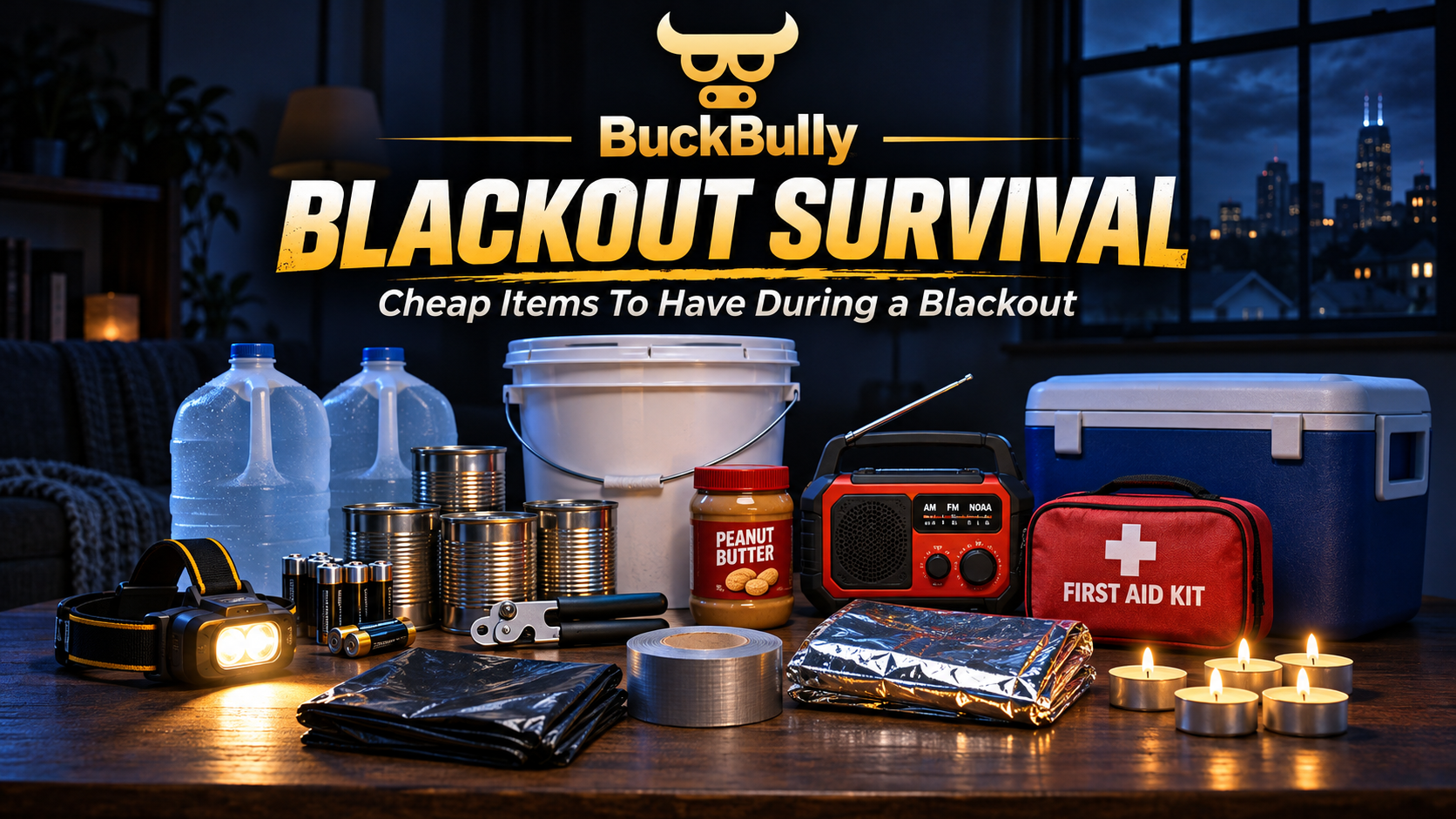
30 CHEAP ITEMS EVERY HOUSEHOLD SHOULD HAVE
Affordable emergency supplies, survival strategies and smart storage ideas for when the power goes out.
When the electricity goes out, everything changes. Lights disappear, refrigerators stop cooling, cell phones run low, and heating or cooling equipment may become useless.
What many households overlook is that some of the most important blackout supplies cost only a few dollars. A five-gallon bucket, contractor bags, manual can opener, emergency blankets and a few cases of drinking water can solve problems that expensive electronics cannot.
We put together 30 practical survival supplies to help households prepare for a short outage, a winter blackout, or a prolonged infrastructure disruption.
01 | How Long Could You Survive Without Power?
Select a preparation window. The emergency water calculator below will adjust automatically.
Changing the time window does not automatically multiply product costs. Food, batteries and fuel must be sized separately for household needs.
02 | Interactive Survival Shopping Checklist
Here are the 30 items from our blackout survival shopping list. Mark what you already own, adjust estimated store prices, and see how much it may cost to complete your kit.
Your checklist is ready.
Prices are illustrative estimates in US dollars, not live retail quotations. Price fields are editable. The cost to buy is based on unchecked items, assumes one listed package per item, and excludes sales tax.
03 | Emergency Water Calculator
Water is the foundation of blackout survival. Public water systems can be affected by pumping failures or contamination advisories, even if your electricity is the only thing you initially notice.
Baseline: one gallon per person daily. The extra-water field adds gallons for the entire household each day. Include additional water for pets, infant feeding, pregnancy, illness and hot weather.
04 | Smart Storage: Organize Before the Emergency
Buying supplies is only half the battle. You also need a system that makes emergency items easy to find in darkness or stressful conditions.
💡 Lighting & Power Bin
Headlamps, batteries, emergency radio, power banks, charging cables and lighters.
Store: Accessible indoor closet or utility shelf.
🥫 Emergency Pantry
Canned food, peanut butter, rice, beans, cocoa, coffee, salt, sugar and a manual can opener.
Store: Cool, dry pantry using oldest supplies first.
💧 Water Reserve
Drinking water, food-grade jugs and separately stored purification supplies.
Store: Protected indoor location, preferably low shelves.
🧦 Winter Survival Bin
Thermal socks, blankets, hand warmers and extra clothing.
Store: Dry closet or bedroom storage chest.
🪣 Sanitation Station
Utility bucket, 3-mil contractor bags, wipes, toilet paper and appropriate cleaning materials.
Store: Bathroom or labeled storage bin.
🔌 Garage Equipment
Generator, approved fuel containers, outdoor stove, extension cords and cooler.
Store: Safely according to equipment and fuel requirements. Operate combustion equipment outdoors.
05 | Blackout Survival Strategies
Select a survival scenario to see what to do, which supplies matter most, and the mistakes to avoid.
06 | Small Purchases, Multiple Survival Uses
5-Gallon Bucket
An inexpensive utility bucket can serve as a lined emergency toilet, dry supply container, cleaning-water carrier or utility rainwater collector.
Use separate, clearly labeled food-grade containers for drinking water.
3-Mil Contractor Bags
Use as emergency toilet liners, waterproof covers, waste containment and improvised rain barriers.
Never place bags over the head, block ventilation or seal emergency exits.
Duct Tape
Temporary patching of damaged coverings, bundling emergency supplies and sealing ordinary drafts.
Do not seal combustion vents or damage escape routes.
Cast-Iron Skillet
A durable pan for a suitable outdoor stove, helping you prepare simple meals when electricity is unavailable.
Check your stove’s weight and cookware restrictions.
Hand Warmers
Portable supplemental warmth during a cold-weather emergency.
Use according to package directions and avoid prolonged direct skin contact.
Cooler & Ice
Helps protect refrigerated food when a refrigerator is without power.
Keep food at 40°F or below and use a thermometer. Snow and outdoor winter air are not reliable substitutes.
07 | The First 72 Hours: Blackout Action Plan
Locate your flashlights and radio. Report the outage to your utility. Check on household members, conserve phone power and assess whether heating or medical equipment requires immediate backup.
Keep refrigerators and freezers closed. Unplug sensitive electronics if necessary. Gather drinking water, ready-to-eat food, medications and warm clothing. Set up safe indoor lighting.
Use an iced cooler for perishables if needed. Monitor indoor temperature. Prepare a safe sanitation plan and assess remaining battery power and water supplies.
Use shelf-stable meals, check utility announcements, preserve communications, and assess whether the home remains safe during extreme temperatures.
Recheck food temperatures and discard unsafe perishables. Rotate batteries and recharging, monitor water usage, and verify medicine and household essentials.
Review fuel, food, safe water, heating and cooling needs. Make an evacuation or temporary-relocation decision if shelter conditions deteriorate.
08 | Blackout Safety: Mistakes That Can Turn Deadly
Operate fuel-burning generators outside, at least 20 feet from doors, windows and vents, with exhaust directed away from the building. Never use a generator or camp stove inside a home, garage, basement, enclosed gazebo or screened patio. Maintain working carbon monoxide alarms.
Most electric space heaters need substantial power and are not suitable for small battery banks. Never heat your home using a charcoal grill, camp stove or gas oven. Battery-powered lanterns are preferable to candles. Never leave candles burning unattended.
An unopened refrigerator generally preserves safe food temperatures for about four hours. A full unopened freezer may last about 48 hours; a half-full freezer about 24 hours. Check actual food temperatures, never taste food to test safety, and discard unsafe perishables.
Use plain, unscented bleach only as instructed by official guidance for its concentration and purpose. Never mix bleach with other cleaners, acids or ammonia. Purification tablets and bleach cannot reliably make chemically contaminated water safe.
Plan additional safe drinking water, temperature control, medications, infant feeding supplies, diapers and hygiene materials. Use ready-to-feed infant formula when appropriate if safe water is uncertain. Do not place loose emergency blankets in an infant’s sleep space.
09 | BuckBully’s Final Survival Strategy
Preparedness isn’t about buying the most expensive equipment. It’s about solving problems before they happen.
Start with what matters most: safe drinking water, reliable lighting, shelf-stable food, a manual can opener, sanitation supplies, warm clothing and a way to receive emergency information.
Then expand your kit gradually. Buy a few supplies with each grocery trip, label your storage containers, rotate food, and test equipment regularly.
Our advice: A $5 manual can opener may be more useful than a $500 generator if you forgot how you’re going to eat. The best emergency kit is the one you can afford, understand and actually use safely.