
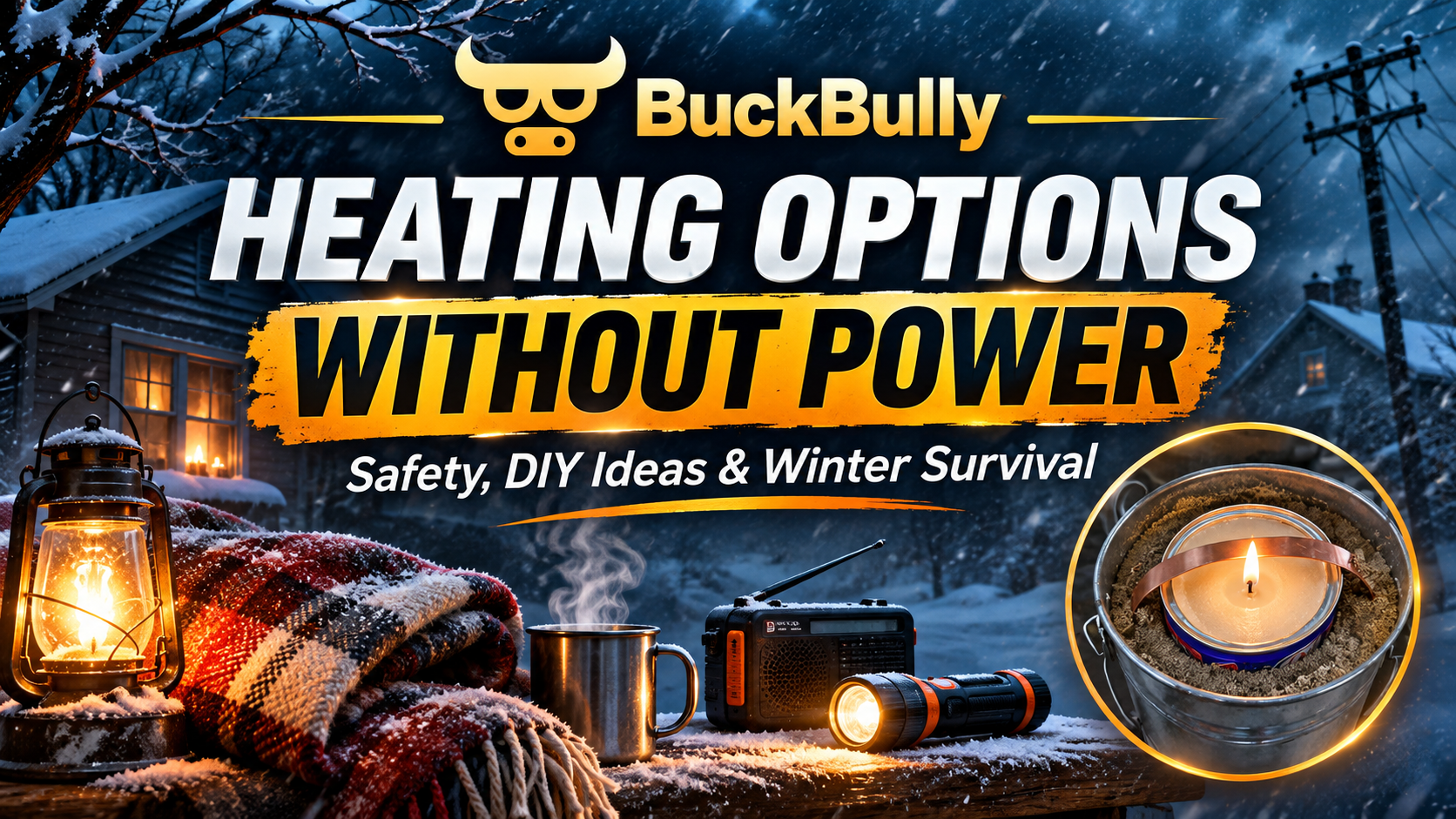
NO POWER.
NO HEAT.
NOW WHAT?
Emergency heating alternatives, heat-retention strategies, practical backup-power options and a photo-illustrated look at the viral DIY Crisco candle heater.
Explore the science, understand the risks, and prepare your household before the next major winter blackout.
What Happens When Your Furnace Stops?
A winter power outage can disable furnace blowers, thermostats and electronic heating controls. Even homes using natural gas may lose central heat.
How quickly a house cools depends on insulation, wind, outdoor temperature, construction and how frequently doors are opened.
The best emergency strategy has three parts: conserve existing warmth, use appropriately installed backup equipment and know when to seek a heated shelter.
Compare Your Emergency Heating Options
Use the filters to explore methods that produce heat, preserve body warmth or require backup power.
Thermal Clothing & Sleeping Bags
Dry layered clothing, thermal socks, sleeping bags and blankets help retain body heat.
Effectiveness: High for personal warmth, but does not heat the room.
Warm-Room Strategy
Gather in one occupied room, close unnecessary interior doors and reduce drafts.
Effectiveness: Slows cooling without generating additional heat.
Wood Stove
A professionally installed and inspected wood stove with proper exhaust venting can provide significant heating.
Effectiveness: Potentially high with adequate fuel.
Gas Fireplace
Certain gas fireplaces can operate without electricity, depending on ignition and controls.
Requirement: Verify manufacturer instructions, venting and outage compatibility.
Indoor-Rated Fuel Heater
Some commercially manufactured heaters are specifically approved for indoor use subject to ventilation, location and other restrictions.
Follow local regulations and the exact manufacturer operating instructions. Never leave such equipment unattended.
Generator & Furnace
A properly connected generator may supply electrical power for compatible furnace controls and fans.
Keep generators outdoors at least 20 feet from doors, windows and vents. Never backfeed home wiring.
Portable Power Station
Battery stations may power appropriately rated electric warming devices.
High-wattage space heaters quickly drain portable batteries.
Indoor Sleeping Shelter
An indoor tent or small protected sleeping area can reduce exposure to drafts when used with suitable bedding.
Never use flame heaters, camping stoves or fuel-burning appliances inside. Keep ventilation and exits clear.
DIY Shortening Candle Heater
Combustion of shortening can generate heat, but a sand-filled bucket and copper strip do not transform it into a certified, safe room heater.
See the visual investigation below.
The Crisco Candle Heater: What the Photos Actually Show
A popular emergency-heating demonstration combines a can of vegetable shortening, a copper strip, sand and a metal bucket.
The idea is that burning shortening produces heat while the surrounding materials absorb or spread some of that energy. But this assembly has not been shown to be a safe or effective household heating appliance.
Visual Photo Guide
Photo case study: user-supplied images of an improvised shortening heater demonstration. Not a safety-tested heating device.
The Shortening Can & Copper Strip
The first image shows a vegetable shortening can positioned inside a metal bucket, with a copper strip placed across the top of the can.
What matters: Copper is an efficient heat conductor, so exposed metal can become dangerously hot during operation.
Sand Surrounding the Container
The next image shows granular material surrounding the shortening can inside the larger bucket.
What matters: Sand can absorb and redistribute heat, but it cannot generate extra energy or guarantee that nearby metal surfaces will remain cool.
Top View of the Arrangement
The third image shows the shortening surface and copper strip with sand surrounding the inner container.
What matters: The design provides no verified control over heat output, container temperature, stability or fire behavior.
Visible Flame in the Demonstration
The fourth image shows a small flame at the surface of the shortening.
What matters: A small flame still presents a fire hazard. An improvised fuel container can also fail, overheat or spill combustible material.
Visual Breakdown of the Components
How Much Heat Would It Really Produce?
Use this interactive comparison to understand how much heat is supplied by devices of different power levels. The numbers are illustrative, not measured output from the photographed DIY device.
80 Watts
273 BTU/hr
A small flame produces far less heat than a typical electric room heater.
Six Practical Ways to Reduce Heat Loss
Choose One Occupied Room
Use a smaller room with an exit, limited drafts and sufficient space for household members.
Close Unused Rooms
Close unnecessary interior doors. Do not block required ventilation for any operating heating appliance.
Use Thermal Curtains
Open curtains during sunny hours. Close them at night to reduce window heat loss.
Reduce Drafts
Use suitable weatherstripping and temporary draft blockers, without obstructing exits or vents.
Insulate Your Body
Use thermal underwear, dry clothing, appropriate sleeping bags and blankets.
Monitor Temperature
Use a battery-powered thermometer and prepare to relocate early if safe warmth cannot be maintained.
How Long Can Backup Power Run a Heater?
A portable battery can provide useful electricity, but resistance heaters consume significant energy.
2000 Wh
Estimated Runtime
Assumes 85% delivered battery energy and continuous operation.
Actual runtime depends on equipment, battery condition, temperature, inverter losses and operating limits. Use only devices approved for the power station.
Is Your Home Prepared?
Answer these questions to identify possible winter blackout preparation gaps. This is not a safe-temperature or survival-time calculator.
Assessment Not Started
Choose your answers and select Assess Preparedness.
What to Do During a Winter Blackout
First Hour
- Confirm and report the outage.
- Gather flashlights and supplies.
- Check smoke and CO alarms.
- Close unnecessary doors.
- Check on household members.
Hours 1–6
- Gather in the designated warm room.
- Use dry layered clothing.
- Check indoor temperature.
- Review weather and utility alerts.
- Prepare transportation if needed.
Hours 6–12
- Reassess indoor conditions.
- Protect infants and vulnerable adults.
- Monitor for cold exposure.
- Seek heated shelter if needed.
Hours 12–24
- Do not assume the home remains safe.
- Prioritize a reliable heated location.
- Check on neighbors where safe.
- Continue monitoring official alerts.
When Extra Precautions Are Essential
👶 Infants & Young Children
Infants are especially vulnerable to cold exposure. Plan access to a reliably heated environment rather than relying on an improvised heater.
Use approved infant sleep clothing. Keep loose blankets, heating pads and electric blankets out of infant sleep spaces.
🤰 Pregnancy, Older Adults & Medical Needs
Household members with medical vulnerabilities, mobility challenges or electricity-dependent equipment may require earlier relocation.
Avoid exposure to combustion fumes and maintain access to medications, transportation and warm shelter.
Smoke and Carbon Monoxide Protection
Smoke Detectors
Maintain smoke alarms inside sleeping rooms, outside sleeping areas and on every level, following local codes.
CO Detectors
Use working battery-powered or battery-backup carbon monoxide alarms in the required locations.
If an alarm sounds, leave immediately for fresh air and contact emergency services.
Winter Heating Videos
These are the three videos supplied for the article. They are educational references, not endorsements of DIY fuel-burning heaters.
Heating Video 1
Heating Video 2
Heating Video 3
Video Safety Questions
- Is the appliance indoor-rated?
- Does it require venting?
- Is the claimed heat output measured?
- Could surfaces become dangerously hot?
- Is it designed for unattended operation?
- Is the fuel container certified?
Your No-Power Heating Checklist
Mark the emergency supplies you already have.
0% Complete
0 items completed
Don’t Let a Power Outage Become a Heating Emergency
The best emergency heating strategy is not the most creative experiment. It’s the one that provides reliable warmth while protecting everyone inside the home.
Use proper insulation, dry clothing, safe backup power and manufacturer-approved heating appliances.
DIY candle and shortening heaters may look impressive in demonstrations, but they are not substitutes for safe, properly installed heating.