
Could His New Executive Order Make Homeownership Affordable Again?
Mortgage insurance relief, cheaper refinancing, lower government loan rates, and factory-built homes are at the center of a new housing affordability push.


The American dream of owning a home has become increasingly expensive. Between stubbornly high mortgage rates, rising property expenses, insurance premiums, and closing costs, many Americans are finding themselves priced out of the housing market.
Now, President Donald Trump is attempting to change that.
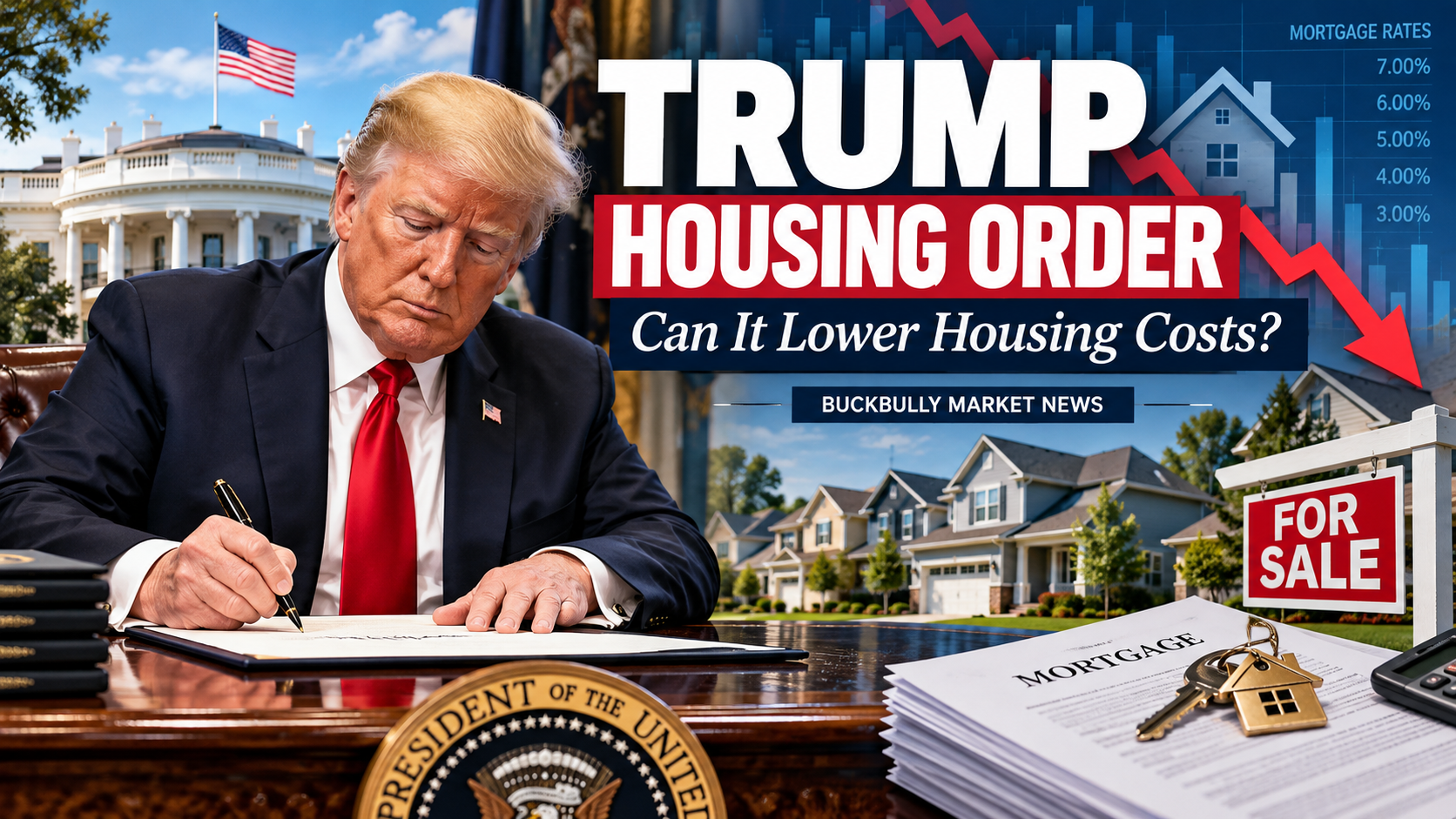
On October 22, 2026, Trump signed an executive order titled “Decreasing Housing Costs for the American People,” targeting several expenses associated with purchasing, refinancing, and owning a home.
But here’s the million-dollar question: Will this actually make homes more affordable, or simply make expensive homes a little cheaper to finance?
Four major changes homeowners should know
1. Automatic mortgage insurance cancellation
The Federal Housing Finance Agency would establish a pilot allowing qualifying borrowers to have private mortgage insurance canceled once they meet equity and payment-history requirements.
Instead of homeowners having to chase down paperwork, eligible loans could be automatically reviewed using current home values.
The catch: The pilot applies only to mortgages originated after it begins, not existing mortgages.
2. Cheaper and easier refinancing
Eligible homeowners could avoid certain lender’s title insurance costs through an expanded automated title-review program.
The order also considers eliminating unnecessary appraisals, repetitive income verification, and some refinancing fees. However, the programs must be implemented before borrowers can benefit.
3. Lower rates on certain USDA and VA loans
The Agriculture and Veterans Affairs departments are directed to lower interest rates on eligible directly issued single-family loans, subject to applicable law and funding.
This does not automatically reduce interest rates across all VA-backed, USDA-guaranteed, or conventional mortgages.
4. More affordable factory-built housing
A new federal task force will explore ways to simplify approvals, modernize manufactured-home production, and reduce construction expenses.
The goal is to increase affordable housing supply without compromising safety and quality standards.
What could homeowners actually save?
The executive order does not establish a universal dollar amount in savings. However, here’s how a few hypothetical scenarios could affect household finances if borrowers qualify.
Illustrative Monthly Savings
How much could lower mortgage expenses save you?
Customize Your Savings
Reducing mortgage insurance and lowering borrowing rates could provide financial relief for qualifying homeowners. Actual savings depend on loan eligibility, refinancing terms, closing costs and implementation.
Educational estimates only. Refinancing calculations compare two new 30-year amortization schedules on the same principal, excluding fees, taxes and insurance. These are separate hypothetical savings scenarios; PMI elimination and refinancing are not guaranteed to apply together. The executive order does not guarantee any particular mortgage interest rate.
Examples only, not government savings estimates. The refinancing illustration compares 7.0% with 6.5% on a new $300,000, 30-year mortgage, excluding fees and term-extension effects. A lower rate is not guaranteed by the order.
For homeowners currently paying PMI, removing an unnecessary monthly premium could provide immediate financial breathing room once they qualify under an applicable program.
But refinancing requires careful math. A lower monthly payment might look attractive, yet extending a mortgage another 30 years can increase total interest paid.
The bigger problem: Home prices are still high
Even with lower fees, buying a home remains a major financial challenge.
Recent reports indicate that mortgage rates have remained elevated, with 30-year fixed mortgage rates around the 7% range in October. High borrowing costs, expensive homes, and weak housing construction activity continue to pressure buyers.
Consider a $300,000 mortgage. The difference between a 7% rate and a 5% rate is substantial.
Mortgage Payment Comparison
How much can a lower mortgage rate really save you?
Monthly Payment Comparison
Total Interest Comparison
Estimates assume fixed rates for the selected loan term. Principal and interest only. Excludes property taxes, homeowners insurance, PMI, HOA fees and closing costs. This is an educational calculator, not a lender quote. Rate scenarios are hypothetical and are not a forecast of government policy or mortgage markets.
Hypothetical rates, not quotes or forecasts.
Payments exclude taxes, property insurance, PMI, HOA fees, and closing costs.
At 5%, the monthly payment is approximately $386 less than at 7%, or about $4,630 annually.
That's a meaningful difference for families trying to make their budgets work. However, the executive order does not mandate a 5% conventional mortgage rate.
Could this backfire and push home prices higher?
There's another side to the housing equation.
When buying becomes cheaper, more people may enter the market. That's great for demand, but without enough homes available, additional buyers could push prices higher.
This creates a balancing act:
- Buyers could benefit from lower borrowing and transaction expenses.
- Existing homeowners could save money on refinancing and insurance.
- Homebuilders could benefit from streamlined manufactured-housing regulations.
- Sellers could see increased demand, potentially supporting higher home prices.
Housing industry observers have also raised concerns that some affordability measures may stimulate demand faster than supply can respond.
HOUSING MARKET METER
Trump Housing Order • Policy Impact Watch
October 26, 2026Potential mortgage cost relief, but broader home affordability remains uncertain.
POLICY IMPACT TRACKER
Tap a housing indicator above to see the potential impact on buyers and homeowners.
The executive order could lower certain mortgage expenses for eligible borrowers. However, actual savings depend on implementation, eligibility and conditions across the housing market.
Editorial policy assessment as of October 26, 2026. Not a live housing-data feed, investment advice, mortgage quote or measured affordability index.
BuckBully editorial assessment, not a measured market index or forecast.
A little housing history: Trump Mortgage LLC
Interestingly, Trump's involvement in the mortgage business isn't entirely new.
In 2006, Trump launched Trump Mortgage LLC, a mortgage brokerage that ultimately shut down after a short run. The company's history provides an interesting contrast to today's efforts to reshape mortgage financing through federal policy.
The current executive order, however, operates through federal housing agencies rather than a private mortgage company.
The BuckBully Bottom Line: Relief or Real Reform?
President Trump's housing executive order represents a targeted attempt to reduce some of the hidden expenses that make homeownership costly.
Eliminating unnecessary PMI, reducing refinance closing costs, and making factory-built homes easier to produce could benefit qualified Americans.
But cutting the cost of financing a home is not the same as cutting the price of the home itself.
Mortgage rates, housing inventory, wages, taxes, insurance, and construction costs will ultimately determine how far the American dream stretches for the average family.
For now, the policy has potential, but implementation and actual borrower savings are what matter.
BuckBully Verdict: HOLD / WATCH. Promising ideas, but too early to declare a housing affordability victory.
Be Bullish On What You Hold.